
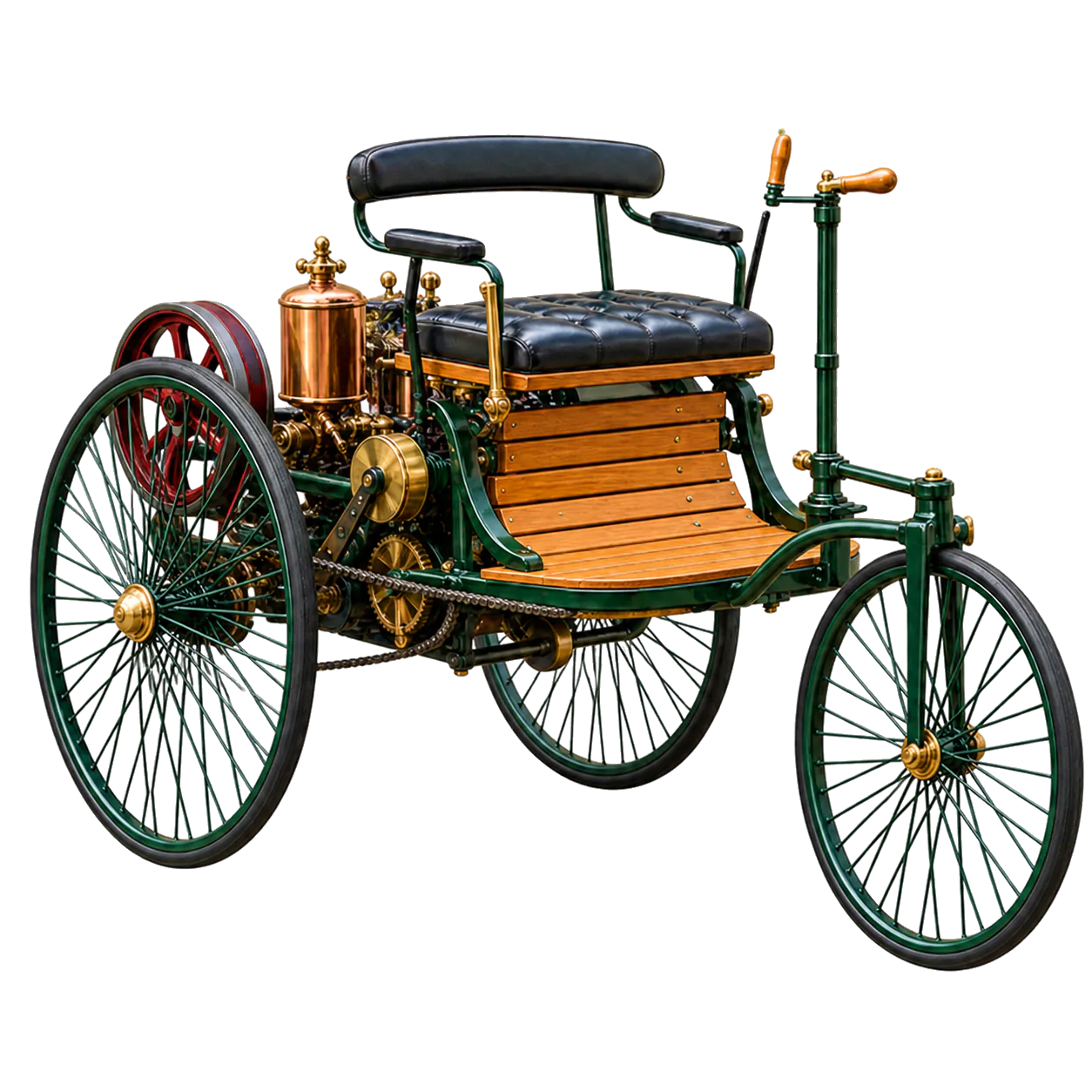
History of the Car
See how automotive form, propulsion, and safety evolved through 24 representative vehicles.
History of the Car Knowledge file
The automobile moved from steam experiments to mass-produced combustion engines and then into the electric, software-defined era; propulsion and infrastructure evolved together.
At a glance
- Steam tricycle
- 1769
- Modern-car prototype
- 1886
- Exhibit milestones
- 24 representative vehicles
- Current direction
- Electric and intelligent
Core concepts
Powertrains keep changing
Steam, gasoline, diesel, hybrid, and battery-electric drive each depend on different energy sources and mechanical layouts.
Assembly lines made cars widespread
Standardized parts and moving assembly lines sharply reduced costs, turning cars from luxury machines into mass transportation.
The body absorbs energy too
Seat belts, crumple zones, airbags, and electronic stability control turned crash protection from a rigid shell into a systems problem.
Ways to understand
- 1769–1885Mechanical experiments
Steam and early electric vehicles proved horseless travel possible, but remained heavy and impractical.
- 1886–1970sCombustion and mass production
Fuel supply, road networks, and large-scale manufacturing together shaped modern car society.
- 1990s–todayElectronic control and new energy
Chips took over more vehicle functions, while batteries and motors redefined powertrain layout.
What to observe
- ObserveWatch body proportions
Engine position, cabin space, and aerodynamics directly change the hood, roof, and track width.
- ObserveWatch the controls
Mechanical linkages were gradually replaced by hydraulic, electronic, and software systems.
- ConsiderTechnology depends on infrastructure
Cars rely not only on vehicles but also on roads, energy supply, regulations, and maintenance systems.