
The Microscopic World
Explore molecules, proteins, viruses, organelles, cells, and microscopic animals at their relative scales.
The Microscopic World Knowledge file
From chemical bonds at atomic scales to tiny animals barely visible to the eye, microscopic structures build matter and life layer by layer.
At a glance
- Smallest
- About 74 picometres
- Largest
- About 0.5 millimetres
- Key units
- nm / μm
- Range
- Molecules to microscopic animals
Core concepts
A micrometre is a thousand nanometres
1 micrometre equals 1,000 nanometres; viruses are usually measured in nanometres and cells in micrometres.
Complexity grows through layers
Atoms make molecules; molecules fold into proteins and form membranes and organelles, which cooperate to build cells.
Different scales need different tools
Light microscopes are limited by wavelength; smaller viruses and molecular structures usually require electron microscopy or indirect imaging.
Ways to understand
- Picometres–nanometresAtoms and small molecules
Chemical bonds and molecular shape determine matter's most basic ability to react.
- NanometresProteins and viruses
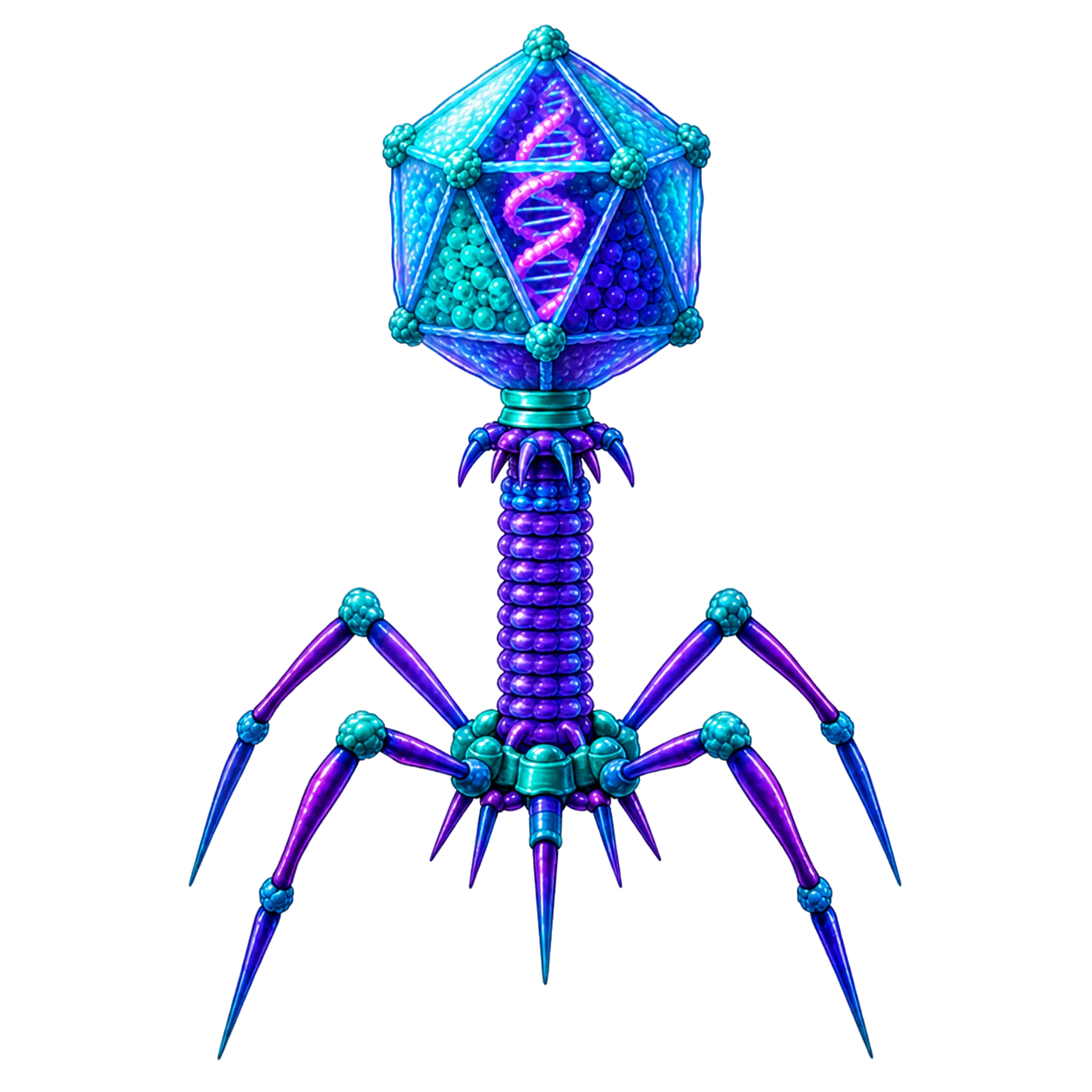
Molecular machines perform catalysis, recognition, and replication, while viruses use hosts to reproduce.
- MicrometresCells and microscopic animals
Membrane-enclosed space allows metabolism to be organized, controlled, and sustained.
What to observe
- ObserveTrack the units
Before comparing values, identify whether the current scale is picometres, nanometres, or micrometres.
- ObserveLook for levels of structure
Find recurring forms of organization such as membranes, shells, and protein complexes.
- ClarifyModel colors are not real colors
Many microscopic objects are smaller than visible-light wavelengths, so color distinguishes structures rather than reproducing their appearance.